North Korea is a communist country in East Asia which occupies the northern half of the Korean Peninsula, with population of 23.9 million inhabitants. The capital and largest city is Pyongyang. The key issue that put North Korea under the spotlight of the international community is their nuclear program activities. Back in 2002, Pyongyang reactivated a nuclear reactor and expelled international inspectors from the country. Such course of action increased tensions among the nuclear superpowers as well as neighboring countries. So far, years of international talks and negotiations regarding the nuclear activities remain unsuccessful. With an army of 9,495,000 active, reserve and paramilitary personnel they possess one of the world's largest armies. Read more about North Korea here. You can also watch a short documentary on life in North Korea on Youtube.
10/31/2011
10/27/2011
Darfur genocide
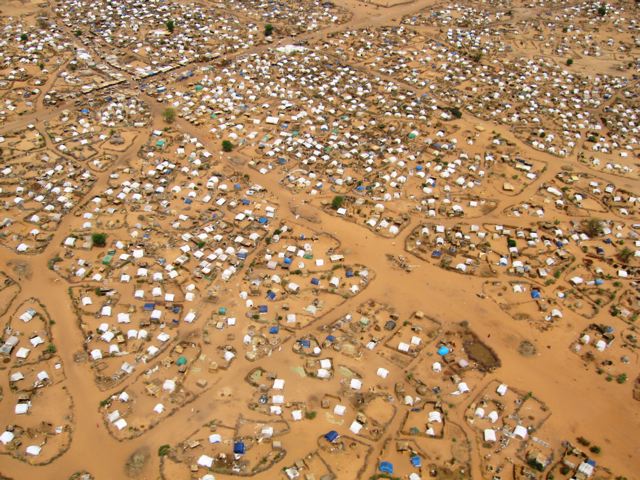
In February 2003 two rebel groups, the Sudan Liberation Army and the Justice and Equality Movement demanded an end to economic marginalization and started a revolution against the Sudanese government. Government answered with a decision to arm Arab militia groups in Darfur called Janjaweed. The partnership was characterized by brutal attacks on civilian population rather than on the rebel forces, trying to destroy everything that can sustain life. Livestock, food stores, wells, blankets or clothing had all been looted or destroyed. Innocent civilians died at the hands of factions, countless women and girls were raped and murdered, large numbers of men were tortured or killed as the violence escalated. Read more about Darfur genocide here. A short documentary on South Sudan current situation is also available.
10/23/2011
Fukushima nuclear accident
On March 11, 2011, an undersea earthquake of 9.0 magnitude hit Japan. It was the most powerful known earthquake to hit Japan and among the five most powerful earthquakes in the world. The epicenter was approximately 70 km east of the Oshika Peninsula of Tōhoku, created a devastating tsunami with a catastrophic effect on the nearby coast. The massive wave shattered the cooling systems at the TEPCO nuclear plant in Fukushima, causing hydrogen explosions and reactor meltdowns. Evacuations of those living within a 20km radius of the plant were taken and extreme measures in order to prevent complete nuclear disaster. Read more about the development of Fukushima nuclear accident here...
10/20/2011
London smog
The weather in London had been unusually cold for several weeks leading up to the Great Smog disaster. Because of the cold weather in 1952, the households were burning more coal than usual to keep warm. Over one million of home stoves in combination with the emissions from industry surrounding the city released into the atmosphere massive amounts of smoke. A light fog dominated the city on December 5, but that was nothing unusual. As night came a combination of light winds, cool air and high humidity at ground-level formed a thick fog. Temperature inversion made the phenomenon motionless and it started to mix with chimney smoke, which contained toxic sulfur-dioxide, making the Great Smog. Read more about the aftermath of the event here...
10/16/2011
Deepwater Horizon oil spill - part II
As a result of oill spill over 6000 dead animals have been collected, mostly birds and sea turtles. Over 100 dolphins and other mammals were also found covered in oil. Experts and volunteers streamed to Louisiana eager to help wildlife in peril. They located live and dead oiled animals in the nearby area. Saved animals were given a full physical examination, after which they were warmed, fed, hydrated and rested. Depending on how severe effect the oill had on them, many were local species were saved and released bac into the wild. Read more about the effects of oill spill in the Gulf of Mexico.
10/14/2011
Deepwater Horizon oil spill
Because of the high standards imposed on oil industry, oil spills occur rather rarely. In 2010 Deepwater Horizon, an offshore rig 396 feet long and 256 feet wide, experienced a series of damaging malfunctions which endangered entire drilling operation resulting in the biggest oil spill in the history. A well control event allowed hydrocarbons to escape causing explosions in which eleven people lost their lives and 17 others suffered from various injuries. The fire continued for 36 hours until the rig sank. All that time oill was released into the sea and started heading towards the shore. Read more about the horrible ecological disaster that unfolded...
10/11/2011
Easter Island deforestation
It seems hard to imagine that once upon a time the Easter Island was actually covered with trees, wildlife flourished and the inhabitants lived in harmony with nature. Today the giant stone heads are all that is left of the native society and a shocking reminder about the consequences of deforestation. The climate in ancient times included rich forests with the tall Easter Island Palm. This large palm was used for building homes, canoes and in the construction of statues. Around 1400 overharvesting the palm and other trees made the island vegetation scarce. In result there was significantly less rainfall and vital natural resource for construction was permanently lost. Rats ate the palm seeds and added to the problem considerably. Read more on how the ancient civilization destroyed itself...
Pretplati se na:
Postovi (Atom)