Business began using internet for marketing after graphical web design became popular in the 1990s. As the world wide web developed, a number of Internet-based businesses accompanied the growth. Most famous companies of the period are eBay, Amazon and Google. Online sales surged with the ability to encrypt credit card data through SSL protocols developed by Netscape. In the late 1990s online businesses started receiving huge capital investments via Initial Public Offerings on the Wall Street. The stocks were selling at prices far above the real value of companies, many of which had good ideas and poor business plans. This documentary covers in great detail the events of dot-com era.

Prikazani su postovi s oznakom Dot-com bubble. Prikaži sve postove
Prikazani su postovi s oznakom Dot-com bubble. Prikaži sve postove
1/23/2012

9/05/2011
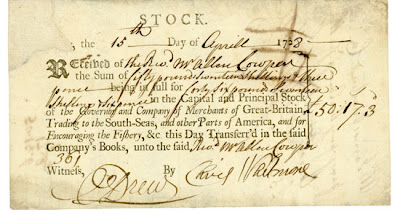
South Sea Company bubble
In the 1700s, the British Empire was the strongest force on the entire globe. The British South Sea Company was formed in 1711 and is considered as a prime example of a speculative bubble. The company was promised a monopoly on trade to the Spanish colonies and the prospect of exclusive rights to trade with new wealthy countries easily attracted more and more investors. Prices of shares spiked in January of 1720, from a modest £128 to £175 in February. With investor confidence mounting, the share price climbed to approximately £330 by the end of March. Speculation drove the price higher around £550 in May. When the South Sea company received the government charter by the end of June, which investors view as a vote of confidence in the company share price skyrocketed at £1050. And then came the collosal price fall that ruined hundreds of people and caused a nationwide crisis. Read more about the South Sea bubble here.


9/03/2011
Dot-com bubble
The dot-com bubble was a speculative bubble covering the period between 1995 and 2000. The bubble was a global phenomenon, which involved many international banks, mutual funds, venture capital, private investors from all over the world. Since public use of the Internet expanded rapidly over the years, Internet business seemed as an infinite source of profit and opportunity. Therefore a group of new purely Internet based companies commonly referred as dot-com emerged. New business paradigm suggested that the survival of the internet company depends on expanding its customer base as rapidly as possible, regardless of the financial result. For example, Google and Amazon did not see any profit in their first years. Amazon was spending money on expanding customer base and advertising and Google using the funds to create a more powerful search engine machine. These are, however, the shining examples. Many failures include NorthPoint Communications, Global Crossing, JDS Uniphase, XO Communications, and Covad Communications. Companies that produced network equipment such as Nortel, Cisco and Corning were at a disadvantage and also failed miserably. Read more about the dot-com bubble.


Pretplati se na:
Postovi (Atom)